Seymour Boardman – Personal Geometries Part I
1940’s to 1960’s
March 23 – September 1, 2013
The Anita Shapolsky Gallery will present an exhibition of Seymour (Sy) Boardman:
“Personal Geometries”
Part I – 1940’s to 1960’s: March 23 – September 1, 2013
Part II – 1970’s to 2000’s: September 10 – November 2, 2013
All: Summer 2013 – A.S. Art Foundation
Seymour Boardman: “Personal Geometries” catalog is now available for order. Published 2013 by the Anita Shapolsky Gallery, “Personal Geometries” features a selection of Sy’s work throughout his life over 40 pages.
Price is $32 including S/H. Please call or email to order.
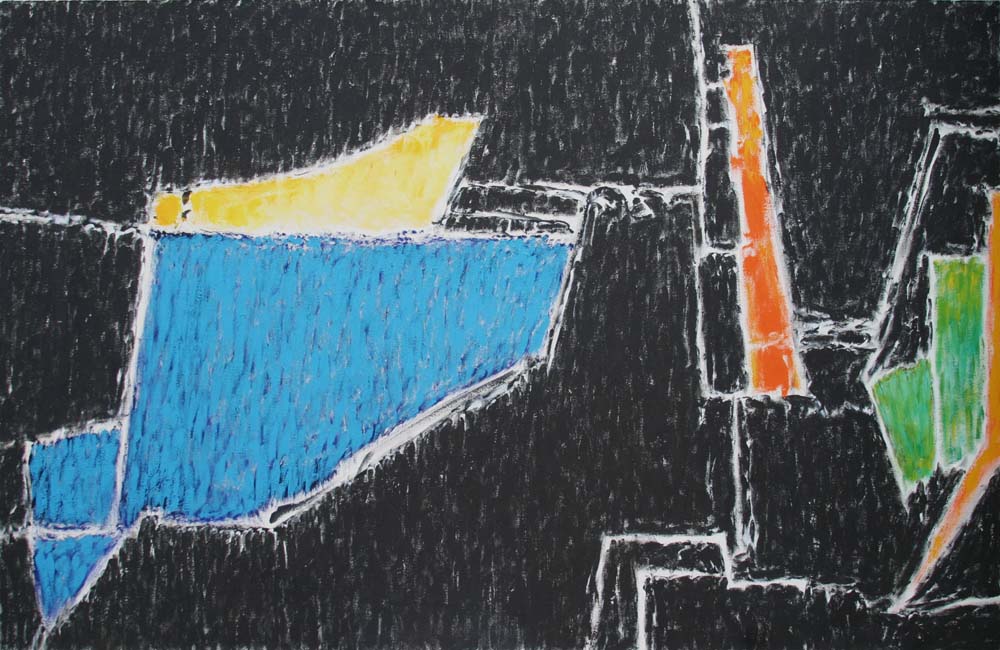
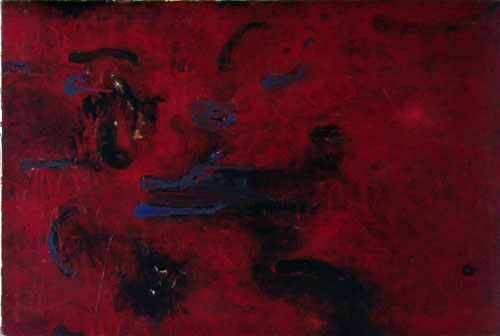
Seymour (Sy) Boardman’s (1921-2005) paintings were shaped by his responses to the major currents of twentieth century abstraction and the aesthetic turmoil of successive art movements of his time. Throughout his work, we observe a particular dynamic in his exploration of the potential vastness and all-inclusiveness of abstraction and his search for systematic and personal formal strategies to create definition and meaning. He established the primacy of his works’ defining visual structure, often relying on sharply articulated geometric principles and shapes, even as he affirmed the personal presence of the artist through subtle and nuanced means. Each series of works he created, indeed each work within these series, engages us in the efforts of an inquisitive visual intelligence exploring the balance between the immanence of absolute being and the artist’s personal act of bringing impersonal realities into view. The results are paintings with distinctive, frequently dramatic impact which suggest a sense of mystery and emotion, a personal statement which is often evocative rather than declarative.
Boardman majored in art at New York’s City College, but his plans were disrupted by World War II, from which he emerged without use of one arm and hand. He returned to painting, choosing to study in Paris from 1946 to 1949 at the École des Beaux Arts, the Académie de la Grand Chaumière, and the Atelier Fernand Leger. This sojourn was followed by a year in New York at the Art Students League and another year in Paris (1950), where he had his first solo exhibition at the Galérie Mai in 1951. When he returned to New York, Sy was inducted into the Martha Jackson Gallery, and remained with her until her death.
Sy worked over the years with patience and maturity, and did all the right things, and more. Sy and his good friends Sam Francis, Robert Ryman, Shirley Jaffe, and Richards Ruben, counteracted with each other as they experienced crises of confidence. Each artist took something from the other in their language of art.