Matter Painting

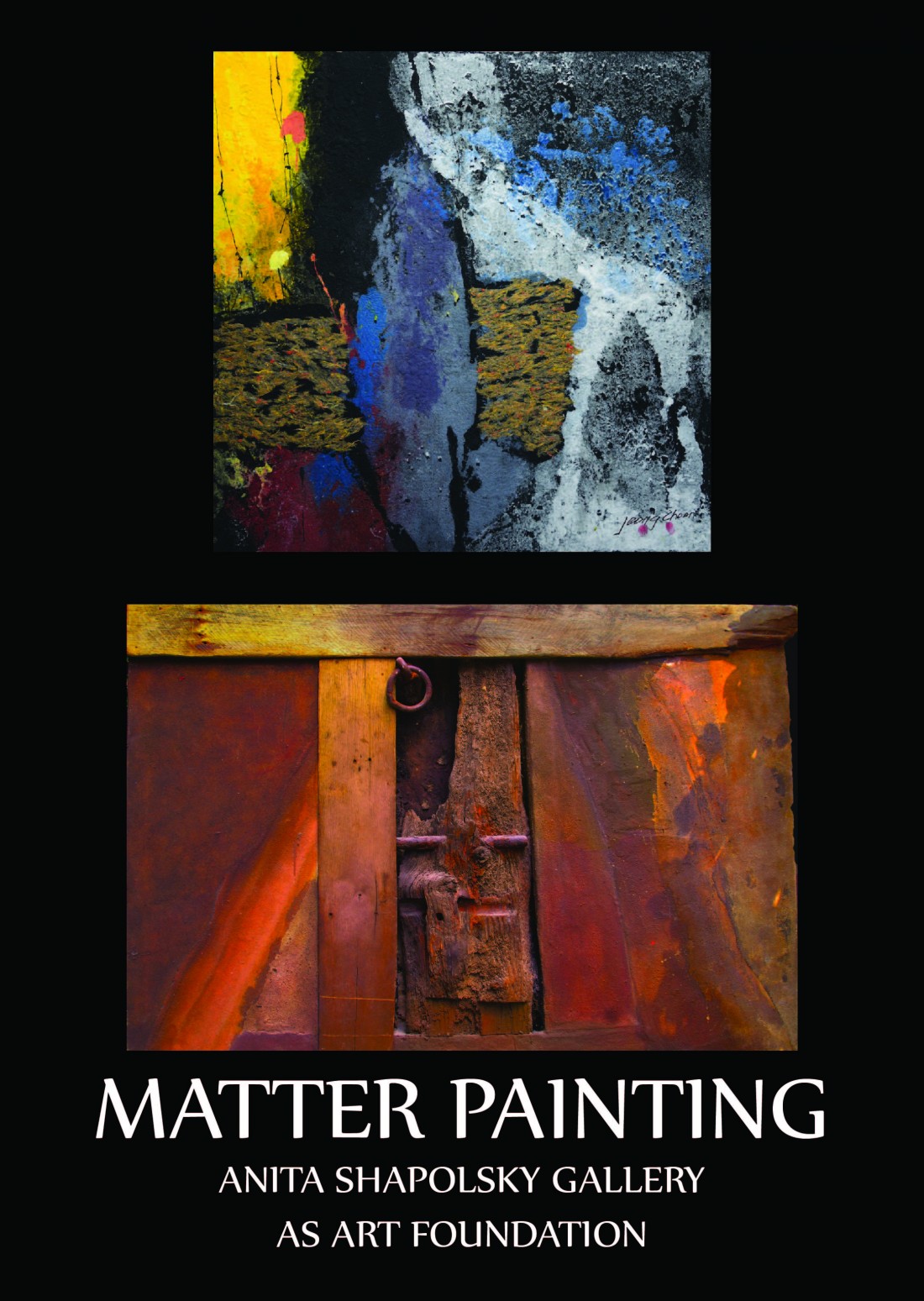
Jeonghang and Choonhyang Yun and Thomas Nonn came from countries with earth-shaking turbulence in their twentieth century history.  There is a powerful physicality in their works manifest in different ways.

The Yuns have created in their works a unique alchemy of ancient Asian techniques and modern Western imagery – abstraction.  They use the bark of the Korean Dak Tree which they collect.  The bark is harvested each year and new trees are re-generated.  Then they begin a meticulous and arduous task of cooking the bark to form a pulp. An organic natural process.  Some of the pulp is blended with ground natural pigments of different colors.  They use both pigmented and non-pigmented pulp in their work.  The Yuns utilize their combined creative energy to manipulate the pulp with its fibrous strands and clumps into orchestrated swatches.  The color composition and texture create an amazing experience.

Thomas Nonn’s paintings in this exhibition were made in the 1990’s to about 2015.  Actually its roots go back to postwar European art.  Nonn who was born in Hungary came to New York in 1957 after the suppression of the 1956 revolution in which he participated.  His own work reflects an enthusiastic response to the material expressionism in Western European and American Painting.  His works rely heavily on the physicality of the art object and the surprising variations created by acids.  He makes rust luminous and his compositions grow directly out of the process and therefore the works are called matter paintings.  Part of their appeal lies in the paradox of both timelessness and metamorphosis.

The paintings continue to change after he finishes them, ensuring a kind of after-life.

Anita Shapolsky

Over 85 – Still Creating

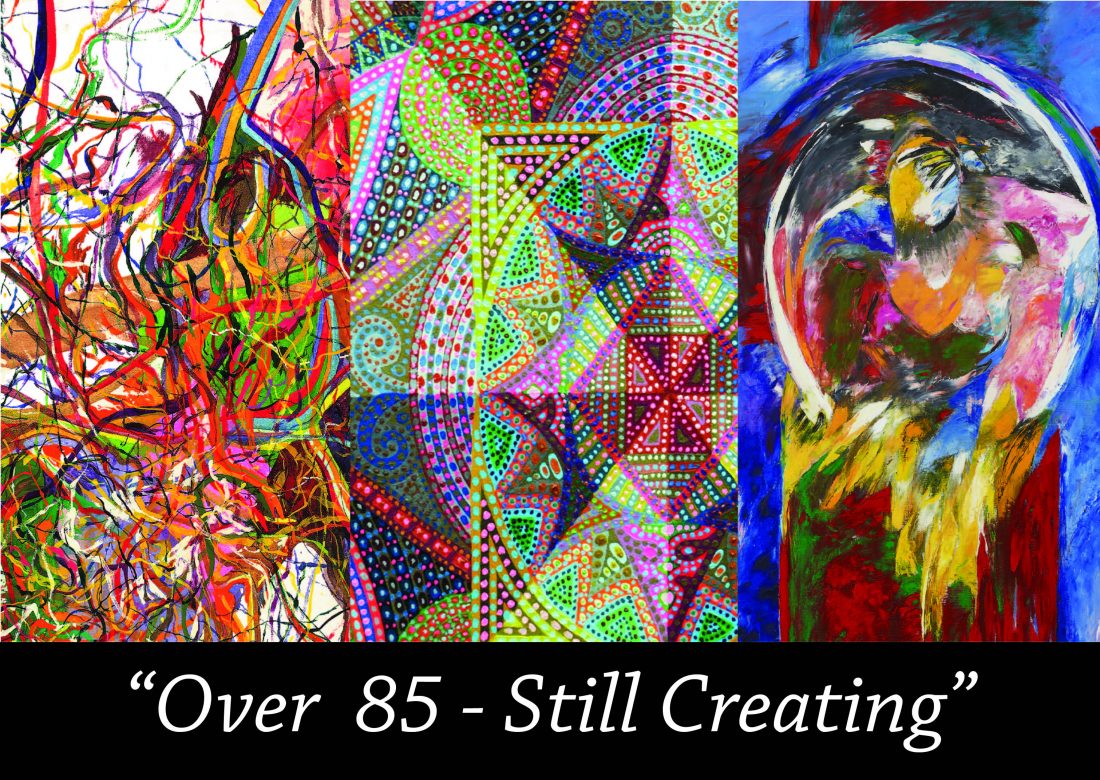
Amaranth Ehrenhalt, Sonia Gechtoff and Liz Whitney Quisgard emerged during the Abstract Expressionist era of the 50s and 60s, and it’s no exaggeration to say that they were eclipsed by their male counterparts. These three have not only outlived many of their peers, but they have blossomed during the decades under the radar: they show internationally and nationally, and their work is collected worldwide. Over 85 –Still Creating marks a turning point, as attention is now being paid to the less well-known, but certainly not less important Abstract Expressionists who often happen to be female. A recent article “Finally, an Exhibition Devoted to the Women of Abstract Expressionism” posted by Jillian Steinhauer (Hyperallergic.com, September 2015) signals the correction to come, yet you can see Over 85–Still Creating, a showcase of three irrepressible, Abstract Expressionist women painters now.

Synthesizing emotional impressions into the physical, Amaranth Ehrenhalt creates sculptures, paintings, fabric designs, watercolors, prints, tapestries and photographs; beginning with color or responding to “an idea has been bothering me,” often working in series to fully capture what needs to be said. Inspired by Classical Jazz, she contrasts “light notes and heavy notes that touch your entire being.” Marcia G. Yerman’s “A Conversation with Amaranth Ehrenhalt” (The Huffington Post, March 2012) surveys this chameleon-like artist’s output, discovering that Amaranth also writes! Ehrenhalt’s “Cafe Society” (Vogue, September 2012) reminisces about her friendship with Alberto Giacometti and captures the tone of the Parisian art scene in the 50s when Sonia Delaunay became her patron. Currently, Amaranth is working on a series of short pieces about Abstract Expressionists that will be published on Amazon. In 2014, she exhibited in “Shifting Ecologies” at The Painting Center, and “Colorimetry” at Galerie102 in Ojai, California.

Sonia Gechtoff wants to “get into the work without overloading it,” and her skill lies in painting ambiguous imagery without being repetitive. Rooted in drawing, her paintings pivot on careful attention to edge and line. “The Beginning” (1960) recalls the fluid, blended, spun-cotton skies of El Greco; it was recently purchased by the Denver Art Museum. Jillian Steinhauer’s Hyperallergic.com article names Sonia as one of the twelve women featured in the Spring 2016, Denver Art Museum show Women of Abstract Expressionism, curated by Gwen Chanzit. When Jillian asks about Gwen’s impetus for the show, Gwen says, “I kept coming back to some female Abstract Expressionists whose paintings challenge the predominately male-centric definition of the movement. Frankly, I was surprised that no major museum exhibition had yet been mounted.”

Liz Whitney Quisgard covers surfaces and sculptures with a modified, wildly inventive pointillism that draws from Oriental carpets and Islamic designs. She eschews meaning and competing with the Ab-Ex patriarchs only seems to fuel her drive to unspool beauty, as her reach grows by the square inch and square foot every day. She remembers being relieved to have a dealer and flattered rather than insulted in the early 60s when André Emmerich told her, “Liz, if you had been a man I would have taken you on two years ago.” Liz is exhibiting in “Middle Eastern Influences” with Fariba Abedin at the Museum of Geometric and MADI Art in Dallas, Texas through January 3, 2016, and in “Vivid” at the Fort Smith Regional Art Museum, Fort Smith, Arkansas; November 14-January 18, 2016.

In the vanguard of showcasing female Abstract Expressionists, Over 85–Still Creating dovetails with the upcoming “Women of Abstract Expressionism”, opening June 12 at the Denver Art Museum. Steinhauer quoting Gwen Chanzit states it best; “I hope to see the time when the canon will have expanded beyond the handful of artists (predominately male) who have previously defined Abstract Expressionism. Then we can show works by male and female painters of this movement side by side and appreciate the distinct qualities of all these individuals.”
–Elizabeth Johnson

Over 85 - Still Creating | Symposium

Ernest Briggs & Friends

September 24th – November 28th
Opening Reception: Tuesday, September 29th 6-8PM

Click Here to see the online catalog

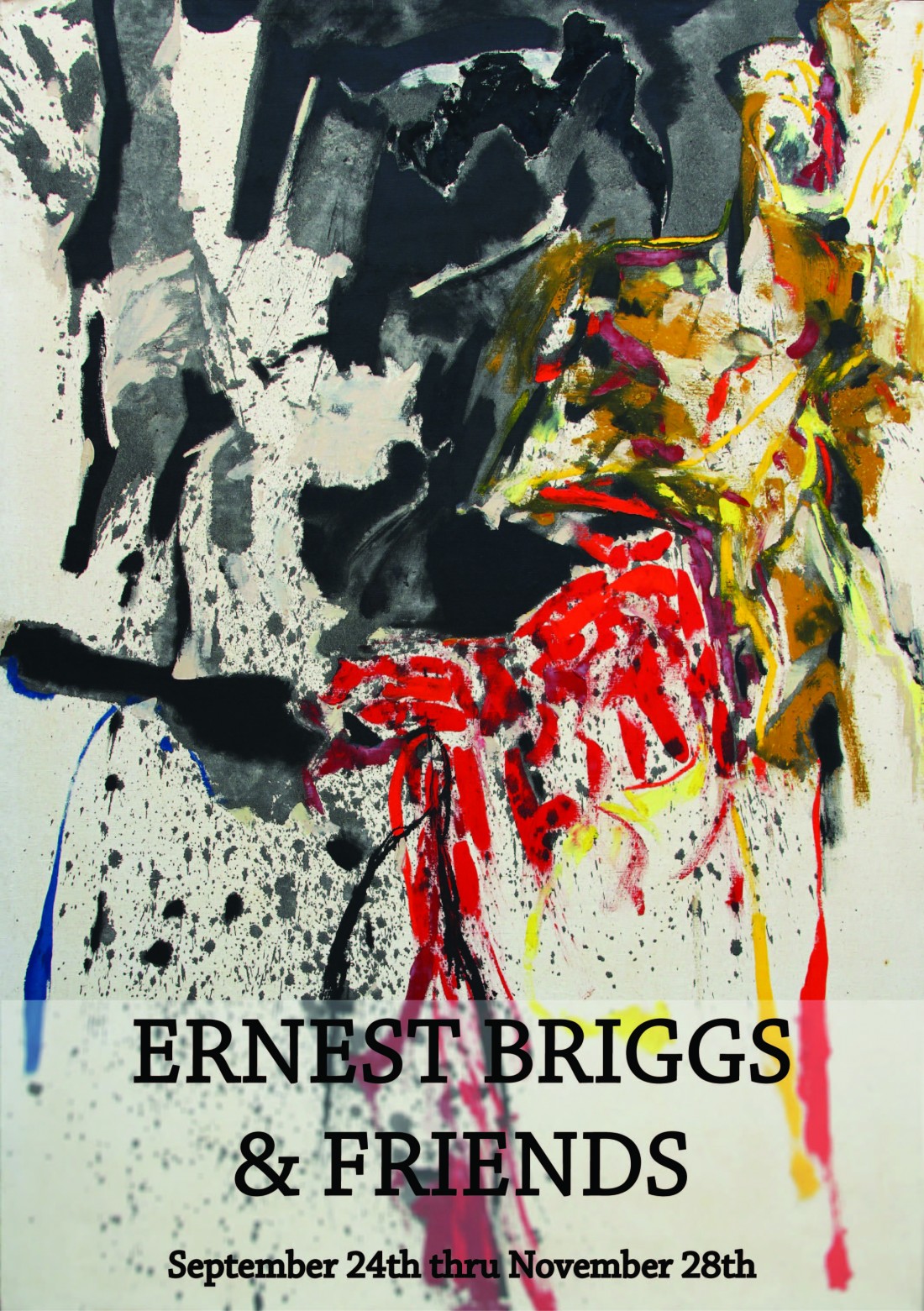
Opening September 24, 2015 at the Anita Shapolsky Gallery, Ernest Briggs and Friends joins the work of Ernest Briggs, Anne Arnold, Sonia Gechtoff, and Jon Schueler, cluing viewers into the shared aesthetic and close relationships that these artists enjoyed during the rise of Abstract  Expressionism.
Writing for Art in America (Nov/Dec 1975), Peter Selz revisits Clyfford Still’s work after thirty years, describing West Coast abstract painters as being “wilder, less refined, less organized, less intellectual, less concerned with  Surreal metaphor…more sensual, more organic, more directed towards nature, which was in close proximity.” Briggs and Schueler studied in the late 40’s through the early 50’s with Still at the California School of Fine Arts, now known as the San Francisco Art Institute, during the period that Ad Reinhart, Mark Rothko, Richard Diebenkorn, David Park and Hassel Smith were invited by Douglas MacAgy to teach there. Inspired by Still, who admired Arshille Gorky, Briggs and Schueler painted edge-to-edge, slathering paint on the canvas with a palette knife, brushes, rags and their fingers. West Coast culture freely mixed Beat Poetry, Jazz, Bebop, and Zen Buddhism at events and readings. Briggs and Schueler both showed at MetArt, an alternative gallery that closed with a show of Clyord Still’s paintings. When Schueler moved to New York in 1951, Still introduced him to Barnett Newman, Franz Kline, Phillip Guston, and Joan Mitchell (to name a few), and he showed at the Stable Gallery in 1954, at the Castelli Gallery in 1957 and 1959. Briggs arrived in New York in 1953, scoring one-man shows at the Stable Gallery in 1954 and 1955. He was included in Twelve Americans at MoMA in 1956.

Sonia Gechto studied at the Philadelphia Museum School of Art, now the University of the Arts, moving to San Francisco in 1951. Her mother Ethel Gechto owned the East West Gallery (1956-58). Like Briggs and Schueler, Sonia gravitated towards abstraction — although she was initially a figurative or social realist painter. She absorbed the influence of Clyfford Still through her close friendship with Briggs, making atmospheric paintings of masses of lines; and later, colorful, flame-like compositions. She was the first woman to show at the Ferus Gallery in Los Angeles, and she exhibited at the Brussels World Fair in 1958. She returned to New York in 1958 with her husband, painter James Kelly, who also studied art at the CSFA on the GI Bill.
The exact opposite of the Abstract Expressionists, Anne Arnold made playful, realistic sculptures of animals and people in wood, ceramic, canvas and other organic materials. She studied sculpture at the Art Students League from 1949-1953. She married Ernest Briggs in 1960 and they moved to Montville, Maine in 1961. After he died in 1984, she focused on drawing and watercolor painting she was befriended by the photographer Robert Brooks until she died in 2014. Anne taught at Geneseo and Brooklyn Colleges and at Columbia University and the University of Pennsylvania. Her work was shown at Fischbach, and is currently represented by the Alexandre Gallery. Ernest Briggs and Friends creates a snapshot of a painter with close personal ties to the abstract artists Jon Schueler and Sonia Gechtoff, and to the witty, realistic sculptor Anne  Arnold. His reputation for prizing change and unpredictability makes sense considering the diverse company he kept and the fact that he entered Abstract Expressionism by way of the quirkier, West Coast door.

It is with great pleasure that we unite these friends once again. Sonia Getchoff is the lone survivor of the group.
She is 89 years young, Bravo!!

Anita Shapolsky

Many Faces of Abstraction

Many Faces of Abstraction

November 22 – February 14, 2015

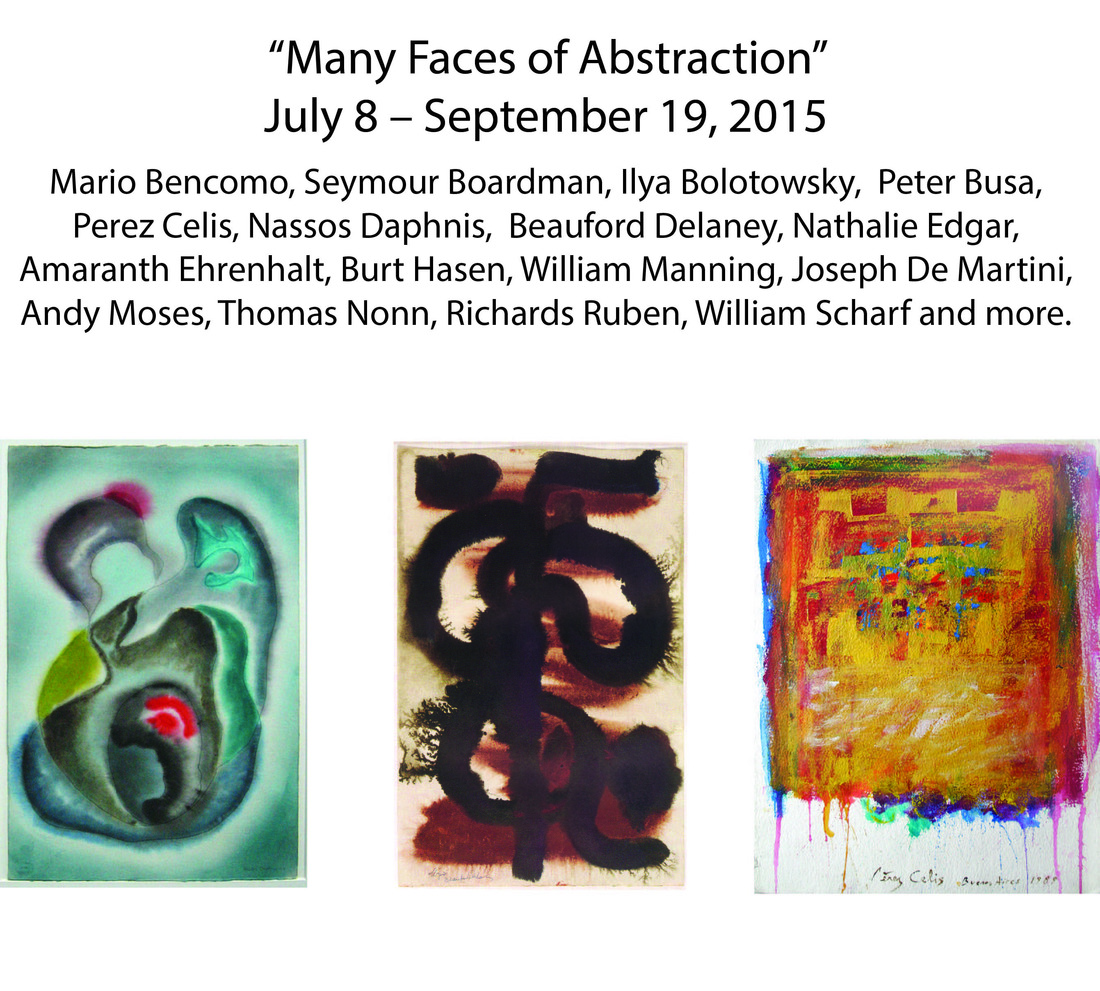
Mario Bencomo, Seymour Boardman, Ilya Bolotowsky, Peter Busa, Perez Celis, Nassos Daphnis, Beauford Delaney , Nathalie Edgar, Amaranth Ehrenhalt, Burt Hasen, William Manning, Joseph De Martini, Andy Moses, Thomas Nonn, Richards Ruben, William Scharf and more.

The Anita Shapolsky Gallery keeps exhibiting energetic and vigorous abstract art that captures attention with an arresting play of moods. The interesting works on display once again contribute to the vibrant New York art scene.

The works featured in this exhibit are paintings and paper works. They are examples of the use of various techniques, materials and artistic ideas. The contrast of the work heightens our awareness of the diverse understanding that these artist brought to color, texture and dimension.

Abstract art has been put into many categories by artist and writers, such as: Abstract Expression, Abstract Impression, Hard Edge, Lyrical, Symbolic, Geometric, Minimalist, Gestural, Emotional and/or Intuitional, Social, Color Field, Graffiti, Surrealist and last but not least, the New York School Action Painters (which combines several categories).

For more information visit our website: www.anitashapolskygallery.com or contact us at: [email protected] Summer Gallery Hours: Wednesday – Thursday 11-5 & by appointment. Visit the Anita Shapolsky Art Foundation, Jim Thorpe, PA : Saturdays & Sundays thru September 7th.